How TrustLens Works
TrustLens provides content verification by creating an immutable record of content provenance, enabling anyone to verify the authenticity and history of digital content. Here's how it works:
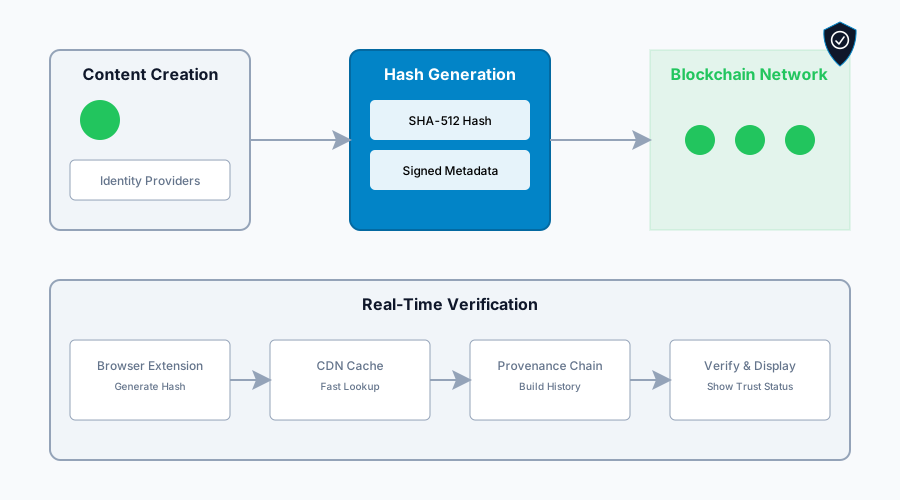
Content Creation & Registration
1. When content is created:
-
A SHA-512 hash is generated from the content
-
Creator authenticates with trusted providers (Apple, Google, Facebook, Twitter, etc…)
-
Content metadata is signed using the provider’s identity verification
-
Hash and signed metadata are recorded on the blockchain
2. Each content entry includes:
-
Content hash
-
Timestamp
-
Creator’s verified identity
-
Content type
-
Digital signature from identity provider
Content Modification Tracking
When content is modified (e.g. cropped, resized, clipped)
-
New hash is generated for modified content
-
Entry links back to original content hash
-
Modification type and parameters are recorded
-
Chain of custody is maintained
Example Modifications
-
Video clips reference source video with timestamp ranges
-
CDN-optimized image link back to originals
-
Edited content shows relationship to source material
Real-Time Verification
When you encounter content online:
-
Browser extension calculates content’s SHA-512 hash
-
Hash is used to lookup provenance data
-
Multi-layer caching ensures fast verification:
-
Browser-level cache
-
CDN edge caching
-
Blockchain network queries
-
-
Full provenance chain is assembled
-
Identity signatures are verified with providers
-
Provenance information is made available to user
Trust Model
TrustLens doesn’t act as an identity authority. Instead it leverages:
-
Established identity providers (Apple, Google, Facebook, Twitter, etc…)
-
Existing identity verification systems
-
Provider-based signature verification
-
Public key infrastructure
This means:
-
No new accounts needed
-
Identity verification you already trust
-
Multiple verification levels supported
-
Decentralized and extensible trust model
Technical Foundations
The system is built on:
-
Blockchain distributed ledger for immutable records
-
SHA-512 for unique content fingerprinting
-
OAuth2/OIDC for identity verification
-
Industry standard cyptography
-
Distributed CDN caching for performance